

Know what to throw.
Pick a species, a spot and a day. Baitlore reads the conditions and tells you what to tie on, where to put it and how to work it.
Your location, today at dusk
Two populations: deep fish on offshore structure near the thermocline, and shallow fish under thick vegetation or shade. Bite is best early, late and at night; midday goes deep or into mats. Oxygen matters: in hot reservoirs the thermocline caps how deep fish will go (typically 13–26 ft).
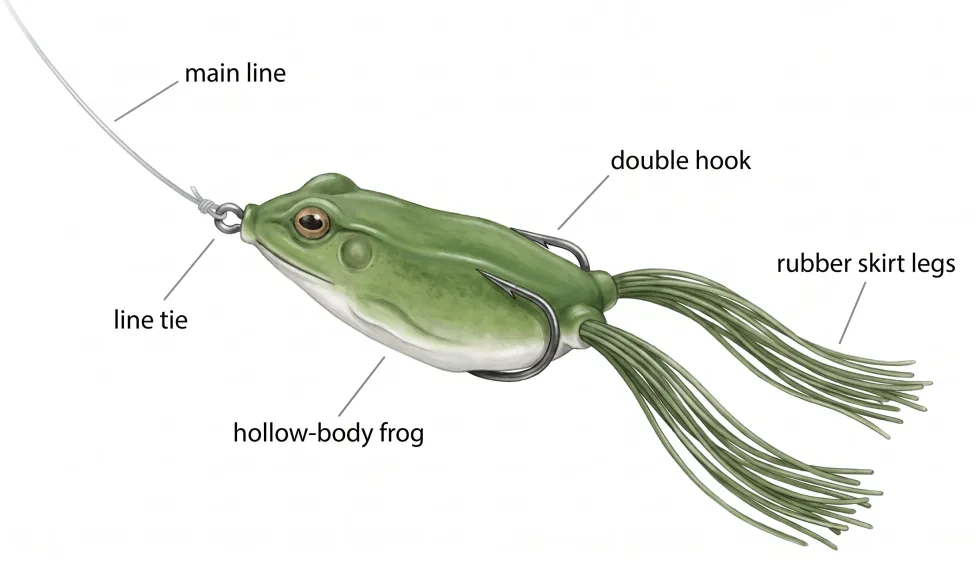
Walk the frog along the edges of the mats and across the sparse grass in roughly 1.5–6.5 ft, pausing in holes; then pop the popper along the outer grass edge with 5–10 s pauses.
Dawn and dusk are the summer windows, and the fish come out of the mats and up from the outer edge to feed on top in water this warm; a frog walked along the mat edges and across the sparse grass reaches both. A popper with a hard pop in the holes and along the outer edge is the follow-up when they swirl and miss.
Coloured water, low light: little light gets through, so go for contrast, either chartreuse and white or black and blue for a strong outline.
Your location, today at dusk
Cooling water brings pike back shallow and feeding hard. As the weed dies back they hold on the last green weed and then follow baitfish to drop-offs. Big baits tend to pick out bigger fish, at the cost of bites.
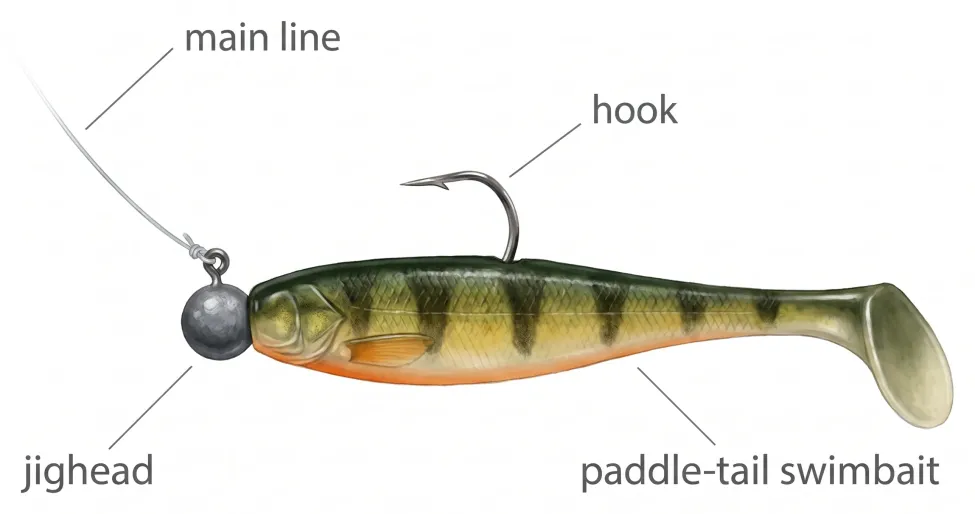
Cast past the drop-off on the windblown bank, count the paddle tail down to just above the bottom in roughly 6.5–16.5 ft and swim it steadily along the break with a stop every few turns.
Low light in a feeding season with chop to keep a moving bait honest: the fish tend to be up on the lip of the break chasing bleak, and a 6–10 in paddle tail on a ¾–1 oz head casts far into the wind and keeps contact where a jerkbait would not. Keep moving along the windblown break rather than hammering one stretch.
Clear water, low light: fish still see well, so stay natural, with a touch of white or gold to catch what light is left.
Your location, today during the day
Baitfish redistribute as the water cools and turns over, and zander follow them onto channel edges, humps, hard edges and shoal margins. A strong season: fish feed for longer periods, and where the water colours up the bite extends into the day.
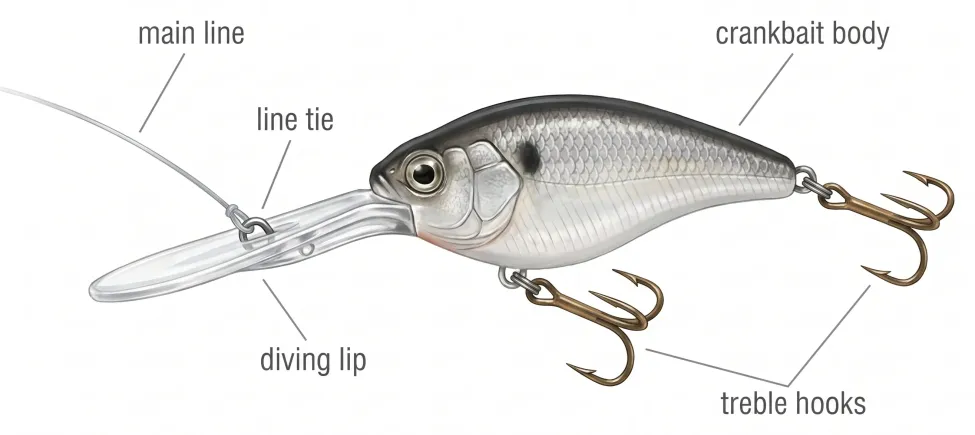
Cast a 4–5 in deep crankbait rated to about 13–16.5 ft along the windblown rocky bank, crank it down until it ticks the stones, then slow and steady with pauses.
Colour and a windblown rocky bank make a strong autumn day bite, and a deep crankbait ticking the stones covers water and deflects off them, so it is the pick. A chatterbait rolled above the rock is the vibration change.
Coloured water, bright light: fish see less far, so add contrast, chartreuse or a touch of orange, on a natural base.
- Species
- Largemouth bass
- When
- Today, dusk
- Water
- ~81°F, coloured
- Spot
- Weeds
- Chartreuse / white
- Black / blue
When they swirl and miss: popper
- Natural baitfish
- White
If the chop gets heavier: spinnerbait
- Chartreuse / white
- Green pumpkin / orange
Once the light fades: paddle-tail swimbait
How the planner works
Pick a few things. Baitlore fills in the rest.
Pick a species


Pick a spot and a day
Get your plan

Cast beside boulders and along the riprap, pop it hard once or twice, pause 3–5 s and repeat.
How the map works
Find a spot, add your own, and plan from any of them.
Find a spot nearby
Add your own

Drop a pin on the water, pick the species you catch there, and share it with other anglers.
Plan from the spot

Night feeder that lies in deep, slow river bends by day and hunts the flats after dark.
Fish the day you have.
Baitlore is free to download on iOS and Android.